°µÍø½ûÇø

Animal Facility

The Animal Facility at the University of °µÍø½ûÇø provides high-quality, ethically governed support for biomedical and translational research. Equipped with modern housing, procedure, and imaging capabilities, the facility enables researchers to conduct rigorous in vivo studies in a controlled and compliant environment.

Our experienced team works closely with academic and industry partners to ensure best practice in animal care, welfare, and experimental design, supporting impactful research outcomes across a range of disciplines.

About the UOW Animal Facility

Research with impact

Animal research conducted at UOW has led to the development of new medications and treatments for human diseases, refinements to current drugs to minimise side effects for patients, and progression of new therapeutics to clinical trials.

Researchers utilising the Molecular Horizons Animal Facility come from a variety of backgrounds and are affiliated with the UOW School of Science, School of Medical, Indigenous and Health Sciences, Graduate School of Medicine, School of Mathematics and Physics, Molecular Horizons, as well as external institutions.

Research themes

Our research themes include:

  • Molecular cell biology
  • Mental health and the ageing brain
  • Novel drug and therapeutic development
  • Investigating the behaviour of diseases such as various cancers, Graft Vs Host Disease (GVHD) and Amyotrophic Lateral Sclerosis (ALS).

Regulation

Animal research is heavily regulated in Australia and researchers can only utilise animals once it has been determined that there are no non-animal alternatives available. Our staff and researchers are committed to employing the most ethical and up-to-date practices that minimise any adverse health and welfare impacts to our animals. This includes:

  • reducing the amount of animals used in research
  • refining techniques to minimise harm,
  • conducting all procedures to a veterinary standard

We invite collaboration with UOW research teams, external institutions, and industry partners.

Researchers with current Animal Research Authorities can discuss their access and training requirements with the Senior Technical Officer – Animal Facility via animalresearch-training@uow.edu.au

Governance

Animal research at UOW is governed by the institutional Animal Ethics Committee. All research is conducted in accordance with Animal Welfare Codes and Legislation. Further information, including our animal use statistics and Annual Report Summary can be found on the UOW Animal Ethics page.

Innovations

We have implemented a number of initiatives that allow us to better support animal welfare and facility operations. These include:

  • Development of an electronic Animal Records Management System for tracking and recording animal experiments and animal welfare.
  • Development of an online Clinical Scoresheet Generator to better observe animal health.
  • Development of an online booking and communication system to allow researchers to plan their experiments in consultation with Animal Facility staff.
  • Using non-animal training methods such as animal mannequins and artificial veins.
  • Rehoming ex-research animals at the conclusion of research wherever possible.
  • Participating in seminars within the Faculty in order to promote openness and transparency.
  • Participating in industry conferences and scholarships in order to enhance our knowledge about ethical animal research.
Equipment and resources

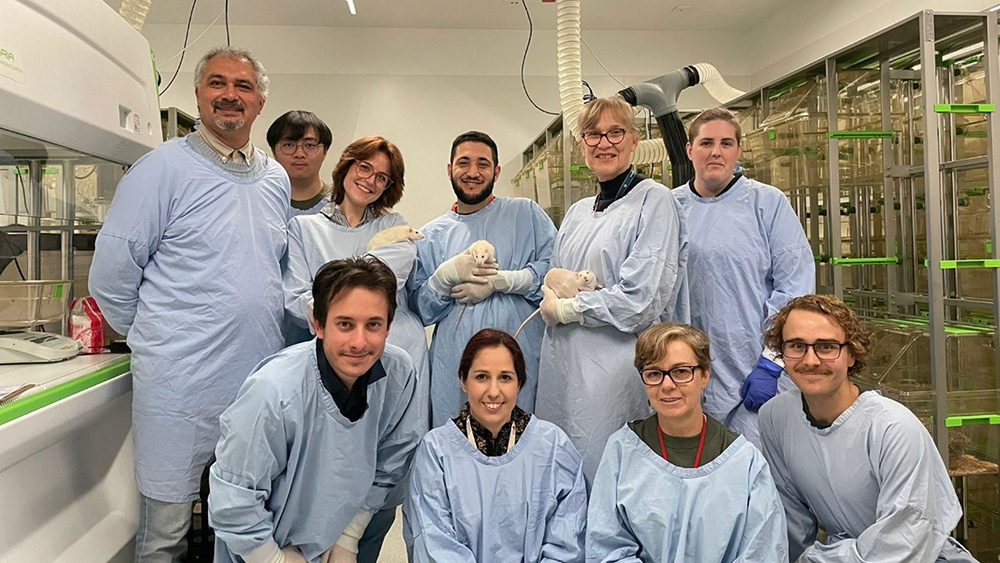
Our Animal Facility houses rats and mice in state of the art enclosures that allow animals to live in groups and perform their natural behaviours. Each rodent cage is individually ventilated to provide fresh, filtered air to each animal. Cages are furnished with bedding, nesting material, shelters, chew blocksnand occasionally wheels, swings, and shelves for added complexity and stimulation. All rat cages also contain a second storey to allow jumping and climbing.

Animals are cared for by our team of dedicated staff who hold tertiary qualifications in animal science and animal technology. Our team is supported by our on-site Veterinarian. Animal Facility staff are responsible for monitoring animal health and wellbeing, cleaning animal enclosures, sterilising equipment, ordering consumables, training researchers in animal techniques, and conducting procedures on behalf of researchers.

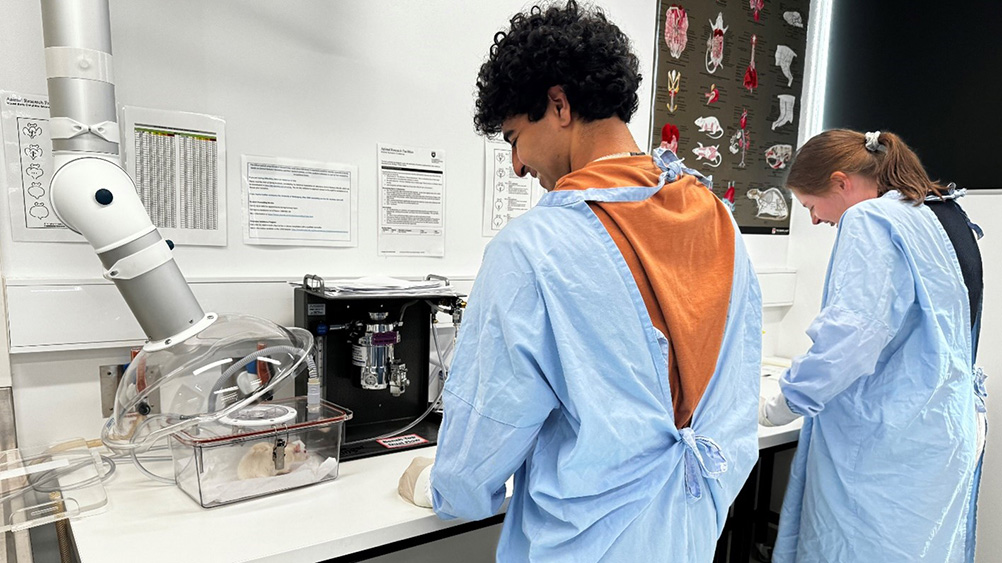
The Animal Facility has five procedure rooms, including:

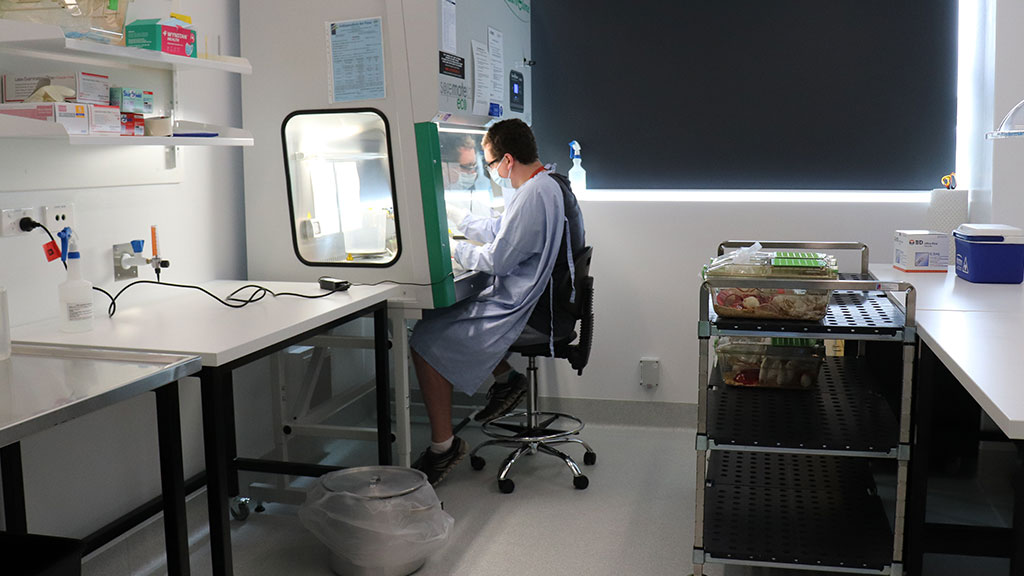
  • two with Class II Biosafety Cabinets
  • one with a cytotoxic drug safety cabinet
  • one extra-large surgical room with dedicated recovery space
  • and one animal imaging room

All procedure rooms are equipped with reticulated oxygen and CO2 gas and animal weighing scales.

Researcher in the procedure room lab

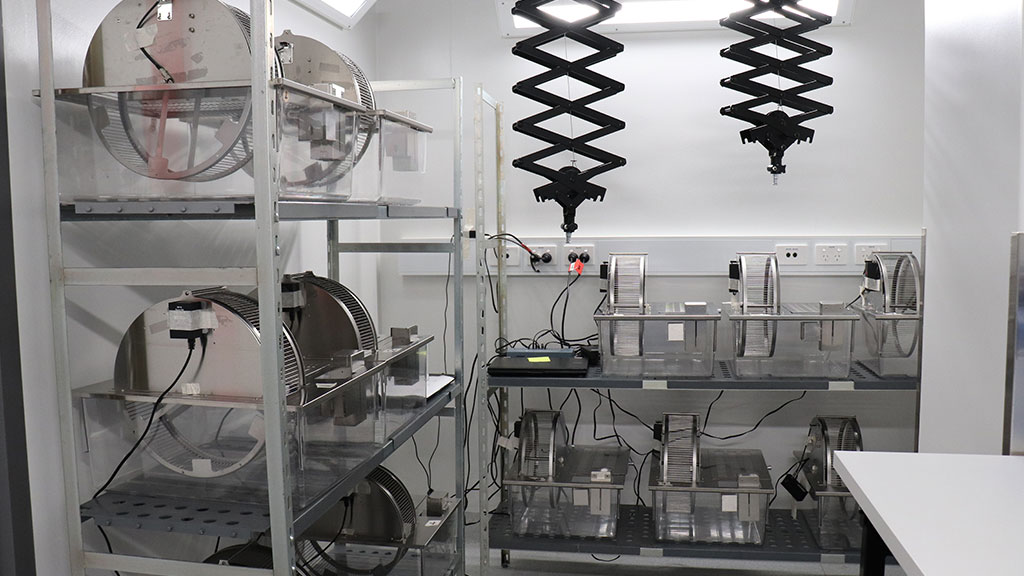
The Animal Facility has five dedicated behaviour testing rooms, all of which are equipped with a flexible camera railing system to enable filming of various behavioural tests.

One room has access to hot and cold water, and two rooms are equipped with desktop computers and behaviour analysis software.

The behavioural testing suite is located at the far end of the animal facility, away from any noise generating areas so as to minimise disruption to behavioural testing.

Behaviour room laboratory

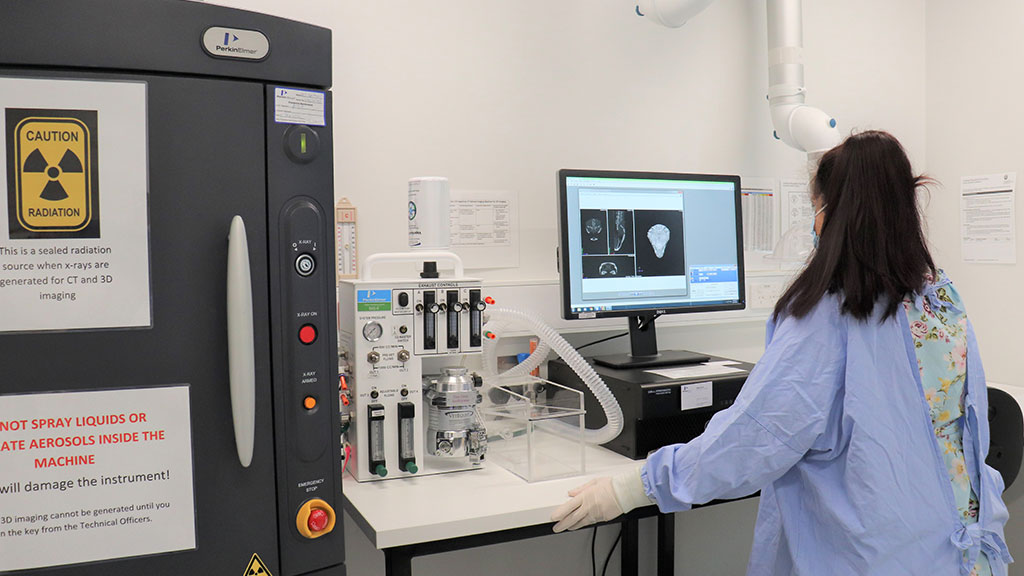
The Animal Facility houses a  for live imaging of small animals, cell plates, or other approved biological samples.

The IVIS Spectrum CT offers 2D and 3D imaging capabilities as well as integrated low-dose micro CT for longitudinal studies. This enables simultaneous molecular and anatomical non-invasive imaging of small live animals up to approximately 250g.

Usage charges are applicable.

Researcher in lab using the Animal Cat Scan device

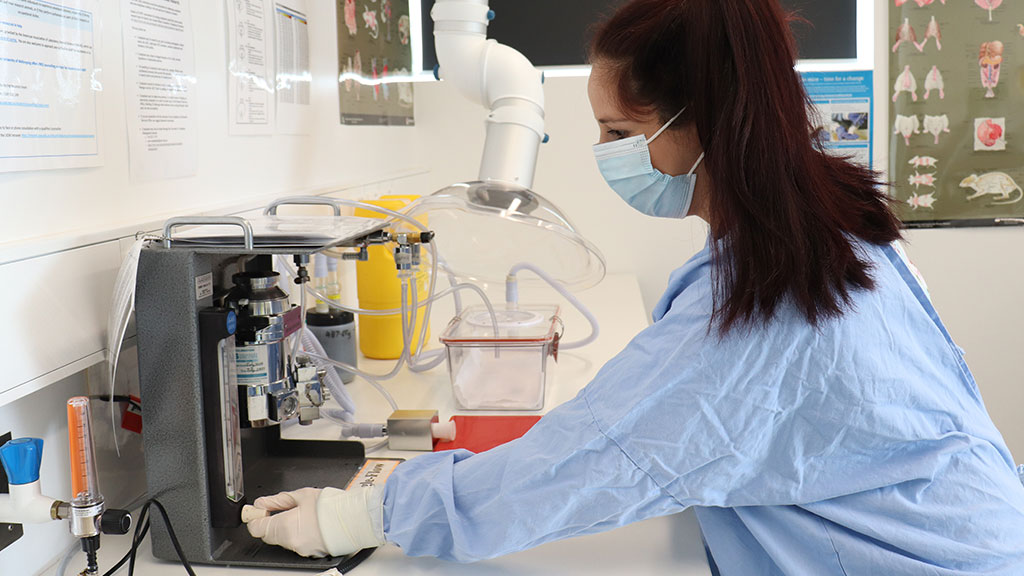
The Animal Facility is equipped with:

  • two small animal anaesthetic machines
  • induction chambers
  • face masks
  • recovery chambers
  • and heat mats.

We also have a heated face mask with rectal temperature probe for controlled heating to prevent hypothermia.

Researcher using equipment in the surgery procedure room

The Animal Facility has a number of shared pieces of small research equipment available for booking. This includes:

  • micro centrifuges
  • heated water baths
  • animal warming cabinet
  • compound microscope
  • animal weighing scales
  • surgical equipment
  • and thermometers.

We also have a limited amount of consumables available for purchase including:

  • needles and syringes
  • swabs
  • anaesthetics
  • and animal medications.

Animal facility staff are highly experienced in common laboratory animal techniques and can assist you with any animal handling, sample collection, injections, and surgeries. Utilising this service benefits animal welfare and sample integrity. Charges may apply.

  •  (Permission required)
  •  

Case studies

Contact us


We invite collaboration with UOW research teams, external institutions, and industry partners.